


ASHWIL BELL
“Build, Fix, Fly” Reaches 33,000 Youth Around the World
In September 2024, Women in Aviation International hosted the 10th annual Girls in Aviation Day (GIAD), a global event designed to inspire the next generation of women in aerospace. With over 194 open houses in 33 countries and 41 U.S. states, GIAD reached 33,000 youth participants this year alone.
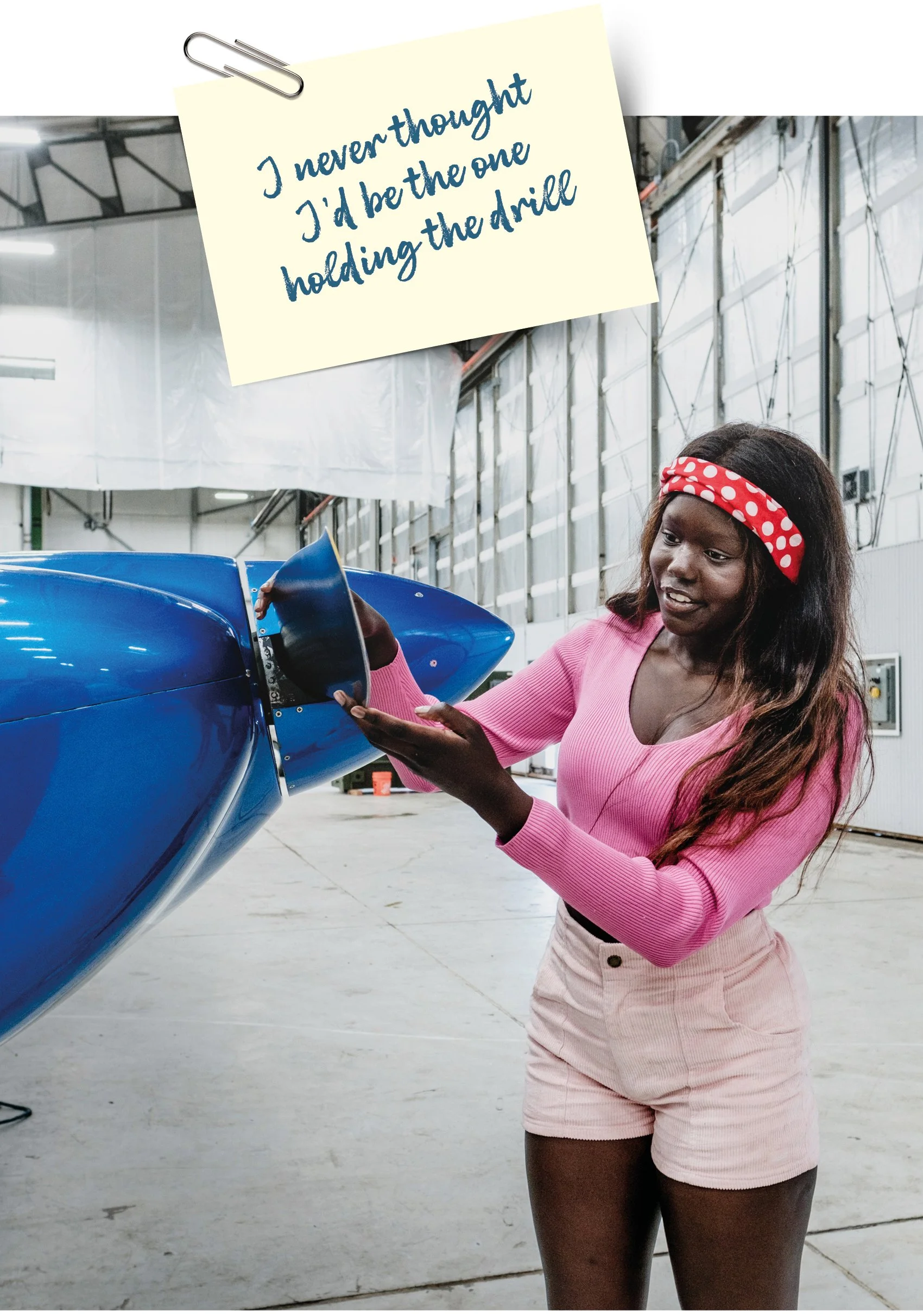
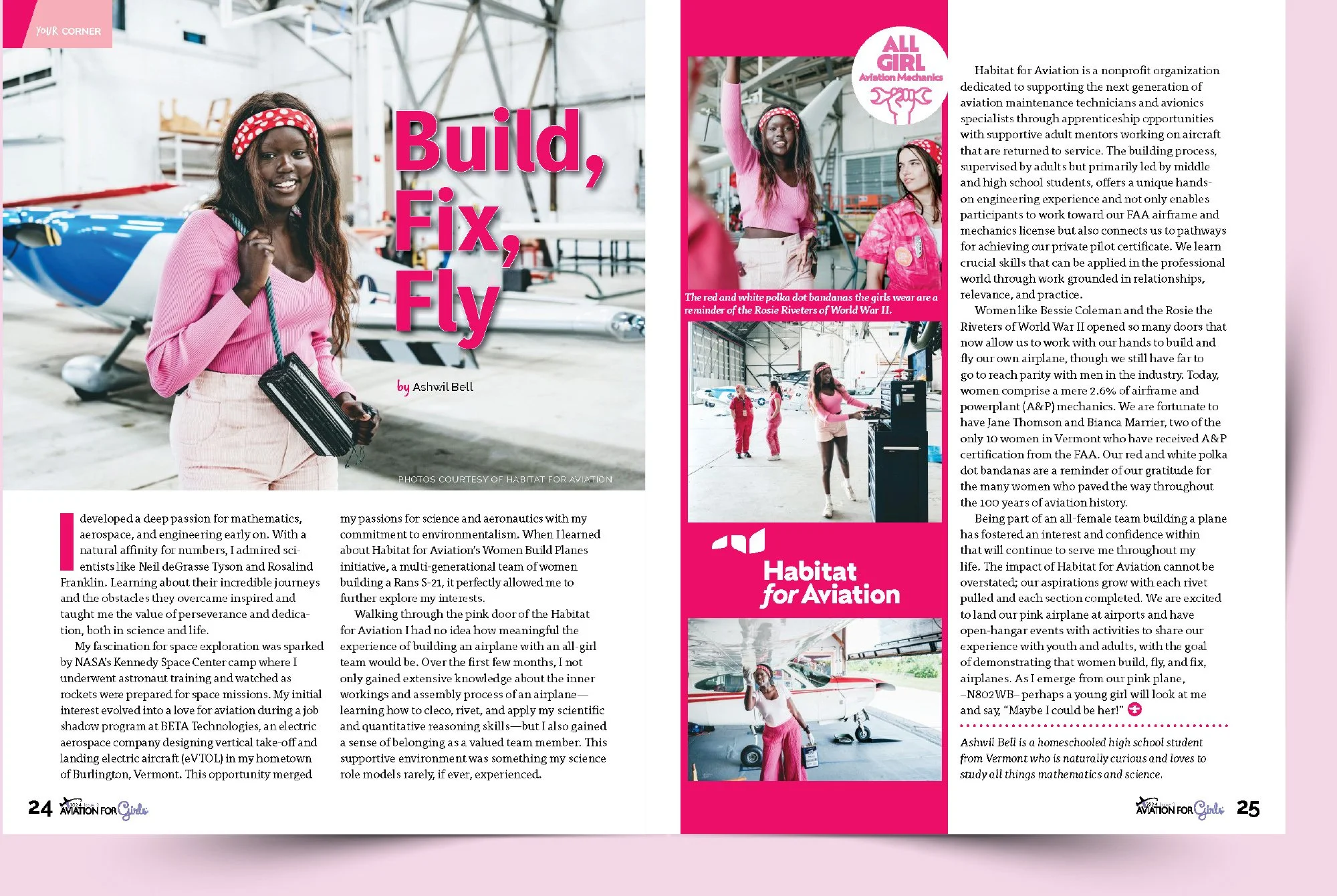
At the heart of this worldwide celebration was one of our own: Ashwil Bell, a Habitat for Aviation WOMEN BUILD PLANES team member whose story, “Build, Fix, Fly,” was featured in Aviation for Girls Magazine and included in every GIAD swag bag distributed globally.
Her article didn’t just highlight her personal journey, it served as a powerful example for young people who may have never seen themselves in aviation. Her words, accompanied by images from our hangar, showed what’s possible when mentorship, skill-building, and belonging come together.
“I had no idea how meaningful the experience of building an airplane with an all-girl team would be.”—Ashwil Bell
We were also honored to be featured in Women in Aviation International’s official newsletter, amplifying our work and model as a proof point for what inclusive aviation education can look like. Our powerful message, sent across oceans and borders, shows that girls belong in aviation.
MIRANDA
GALLAGHER
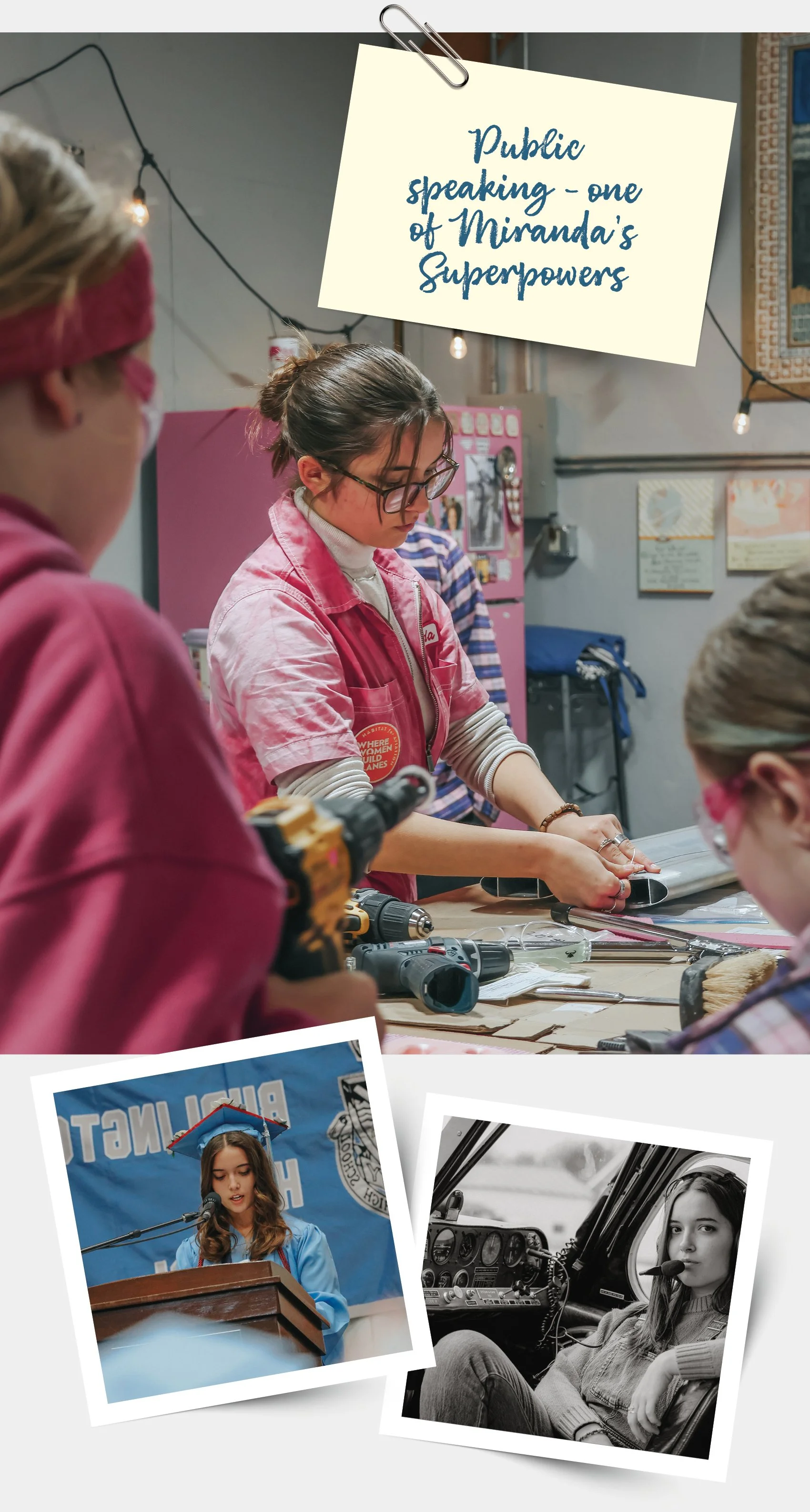
From Apprentice to Aspiring Aerospace Leader
Miranda Gallagher’s journey with Habitat for Aviation began at age 12, when she took her very first Young Eagles flight in Beth White’s small green-and-white Cessna 150.
That initial flight ignited a spark of interest in aviation, and nurtured over years through mentorship, hands-on learning, and a deeply supportive community, has now ignited into an aviation career path.
Early on, Miranda became a fixture at Franklin County Airport. She was eager to learn and quick to help. During the COVID-19 pandemic, she split her time between working on airplanes with mentor George Coy and interning remotely with Beth White at Big Picture Learning to coach school officials on how to make learning individualized in their contexts, in addition to supporting her fellow EAA Chapter 613 youth aviators through one of the most difficult years. It was during this period that her quiet confidence began to take root.
With encouragement from Beth and her family, Miranda applied for a highly competitive spot at Big Picture South Burlington. After landing the last open seat, literally one day before school started, she was admitted and, with the help of the Big Picture Learning approach, began to navigate her way, shaping her own real-world learning pathway through secondary school. Her sophomore year brought a prestigious Harbor Freight Fellowship at BETA Technologies, where she became one of the youngest interns ever to contribute to the future of electric flight and to engage in powerful out-of-school learning right in Big Picture South Burlington’s backyard.
Miranda grew both technically and personally over the years. Public speaking, once a source of angst, became one of her superpowers. Through countless hours of practice and reflection, she transformed into a poised and powerful voice for Habitat for Aviation keynoting conferences, speaking to funders, and giving tours with grace and confidence. She became a reliable thought partner and role model, always ready to advocate for others while growing into a mentor herself for our next wave of builders.
Today, Miranda is headed to Worcester Polytechnic Institute on a full Air Force ROTC scholarship to study aerospace engineering. She’s nearing completion of her private pilot’s license through the Ray Aviation Scholarship and still finds time for robotics, fencing, and leading build sessions with the WOMEN BUILD PLANES team. Though she’s off to college, Miranda’s spirit remains woven into the hangar that shaped her. And she ensures us that she’ll be back!
EMMA
CORNETT
Charting a Flight Path to Avionics
Emma Cornett’s introduction to aviation didn’t begin in a classroom, it started with a spark of curiosity and BETA Technologies’ Summer Fest where, in 2023, she was introduced to Habitat for Aviation’s founder Beth White, by board member Katie Clark.
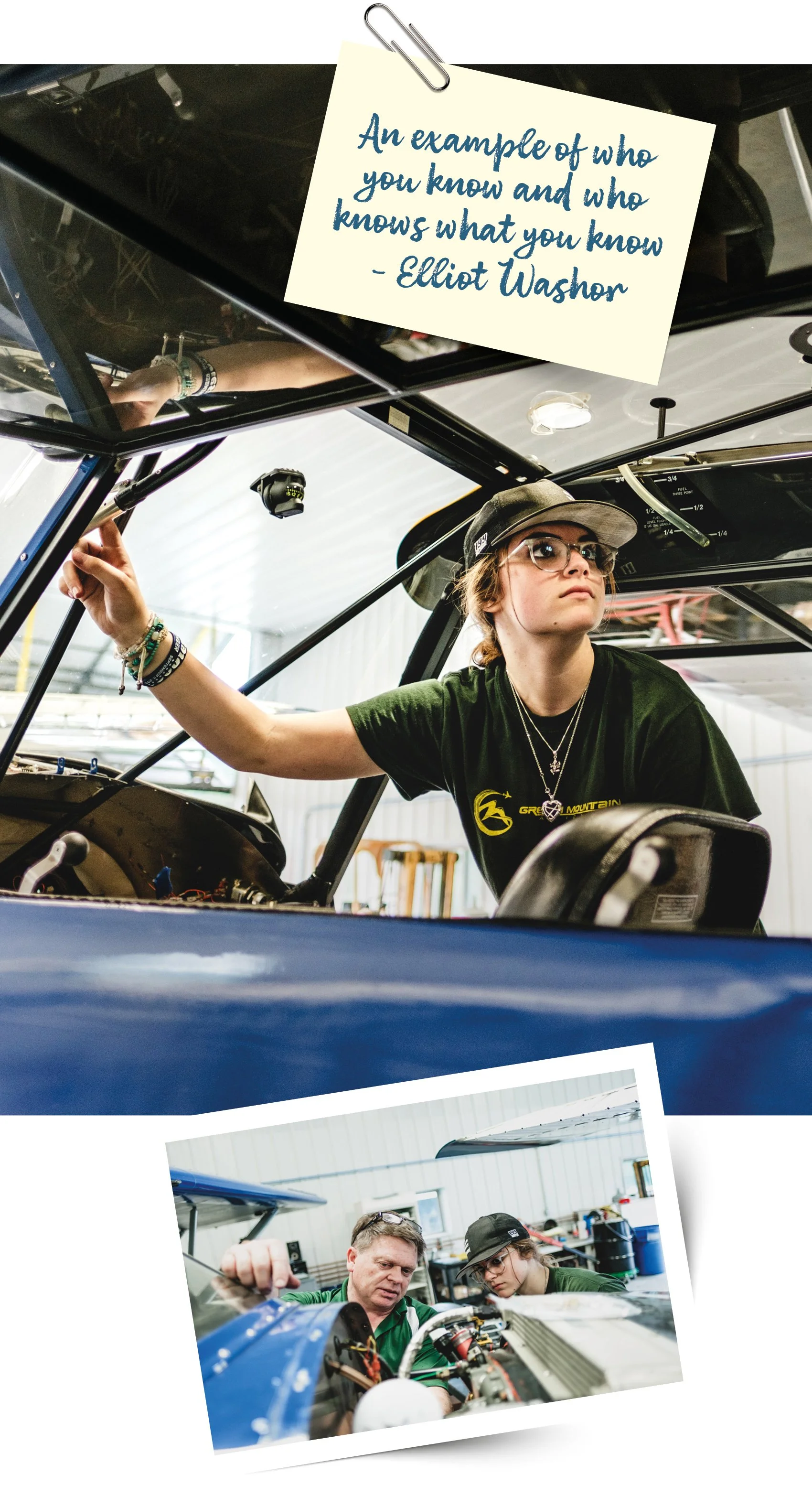
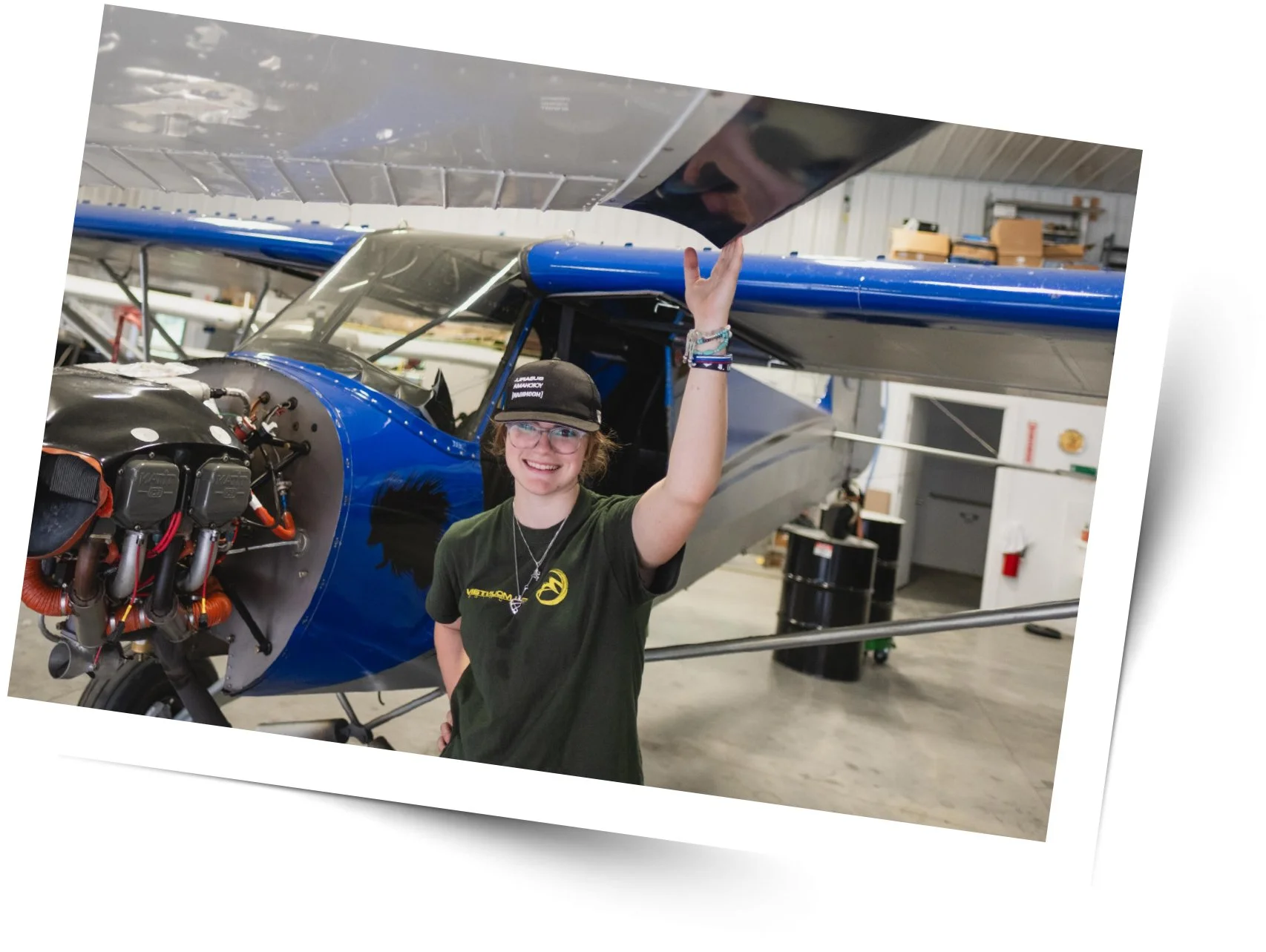
It was immediately evident that Emma had a genuine interest in aviation and after a single visit to the Franklin County State Airport, she was hooked. That moment launched Emma into a hands-on journey that would shape her future. After being nominated for a Harbor Freight Fellowship through Big Picture Learning and completing 120 hours apprenticing alongside George Coy where she learned to service and maintain general aviation aircraft, Emma had a breakthrough moment. During one of their mentoring sessions, while restoring a vintage Cessna 150, Emma and George encountered an issue with the instrument panel. A troubleshooting call to an avionics shop ignited a new interest: avionics.
A week later, after a build session with our WOMEN BUILD PLANES team, George and Beth pitched an idea to Emma: would she be open to shadowing a tech at this avionics shop? She said yes.
One week later, Emma spent the afternoon alongside an avionics expert. That opportunity turned into a second 120-hour Harbor Freight Fellowship, a $1,000 scholarship, and eventually, a paid part-time position. By summer, she was working full-time in the field while still in high school.
Emma made the decision to graduate early through Vermont’s Act 77 flexible pathways initiative, supported by coaching from Big Picture Learning Regional Director/Habitat for Aviation Pilot in Command, Beth White. This fall, she’ll begin her FAA A&P training at Nashua Community College in New Hampshire.
Through real-world learning grounded in relationship, relevance, and practice, Emma has gained the confidence to enter a future that redefines what leadership in aviation can look like.
MYA
ADAMS
Finding Her Voice, Charting Her Course
When Mya Adams first walked into the hangar at Franklin County State Airport, she kept mostly to herself and remained hidden behind a Covid face mask. Her voice was seldom heard but her presence mattered. Traditional school had been an uphill battle, and peers often made her feel invisible or misunderstood. Within our welcoming hangar, Mya began to unfurl.
A proud Vermonter from Hardwick with deep ancestral roots tracing back to the Native American people of Bar Harbor, Maine, Mya travels nearly two hours each way to pursue her passion for aviation. Her grandfather, “Papa”, is her unwavering copilot—driving her to build days and flight lessons, plane-spotting by her side, and even learning how to use the Flightradar24 app so he could track her flights.
The transition in this youth aviator and WOMEN BUILD PLANES team member has been nothing short of remarkable. Today, Mya confidently welcomes and gives tours to newcomers and is gaining confidence with skills like clecoing, riveting, and manual reading.
Once reluctant to speak, she now advocates fiercely for herself whether it be to college admissions officers or in scholarship applications, Mya is charting her own aviation path, one that blends traditional coursework with self-driven training toward her pilot’s license.
It is no surprise that Mya has earned over $40,000 in scholarships to support her dream. Currently enrolled in early College at Vermont State University, Mya is getting a jumpstart on her Professional Pilot Technologies degree all and working toward her Private Pilot License, which was generously supported by a national EAA Ray Scholarship.
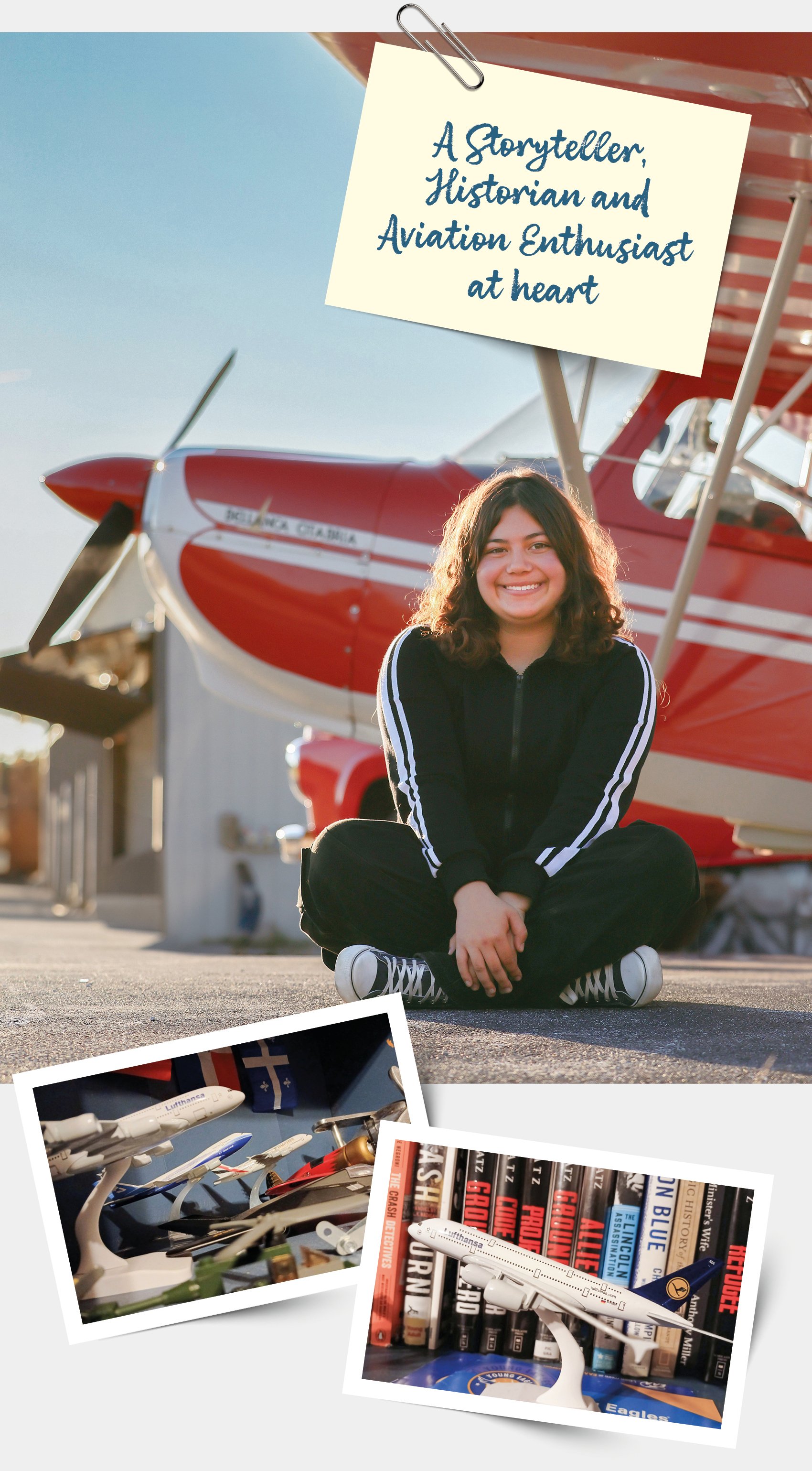
A storyteller, historian, and aviation enthusiast at heart, Mya’s bedroom is lined with books, flight models, and her own photography. Her love of aviation, first sparked by childhood visits to airport observation decks, has now become her calling and her community. At Habitat for Aviation, she’s found belonging and belief in herself. Mya isn’t just becoming a pilot, she’s becoming a leader, and mentor.
OWEN
MONGEON
At Home in the Hangar
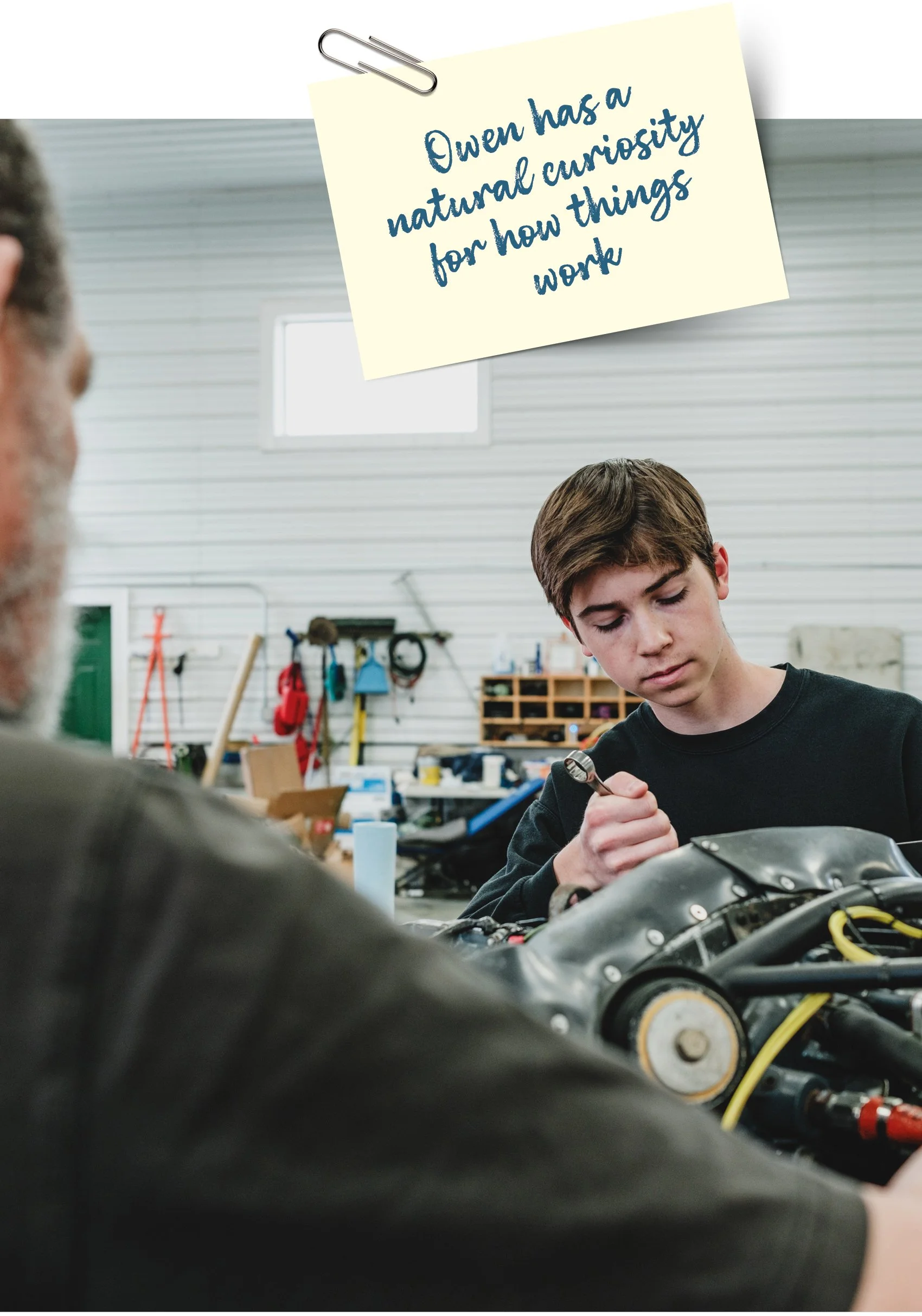
Owen has always had a natural curiosity for how things work and a drive to build with his hands. His journey into aviation began with a single flight at Vermont’s Transportation Camp, a moment that sparked a deeper interest and led him to connect with EAA Chapter 613, where he began learning the basics of aircraft systems and maintenance.
Seeing a level of interest and commitment, Beth nominated Owen for a Harbor Freight Fellowship with seasoned A&P mechanic, George Coy. It was clear that Owen felt at home in the hangar turning wrenches, learning tool use, understanding aircraft systems, and gaining confidence in a professional aviation environment. This confirmed what we all suspected: aircraft maintenance is the path for Owen.
Through the Fellowship, Owen gained more than just technical know-how. He experienced what it felt like to have a mentor who really came to know him personally, to be taken seriously, to be part of a professional community that valued his contributions. This gave Owen a huge boost heading into college, helping him feel prepared and confident because he had this real world experience.
This fall, Owen will attend Utah State University to study Aviation Technology and Aircraft Maintenance. His Harbor Freight Fellowship didn’t just spark an interest, it laid the foundation for a future in aviation.
CASSIDY
MCKUSICK
Charting an Unconventional Course in a New Habitat
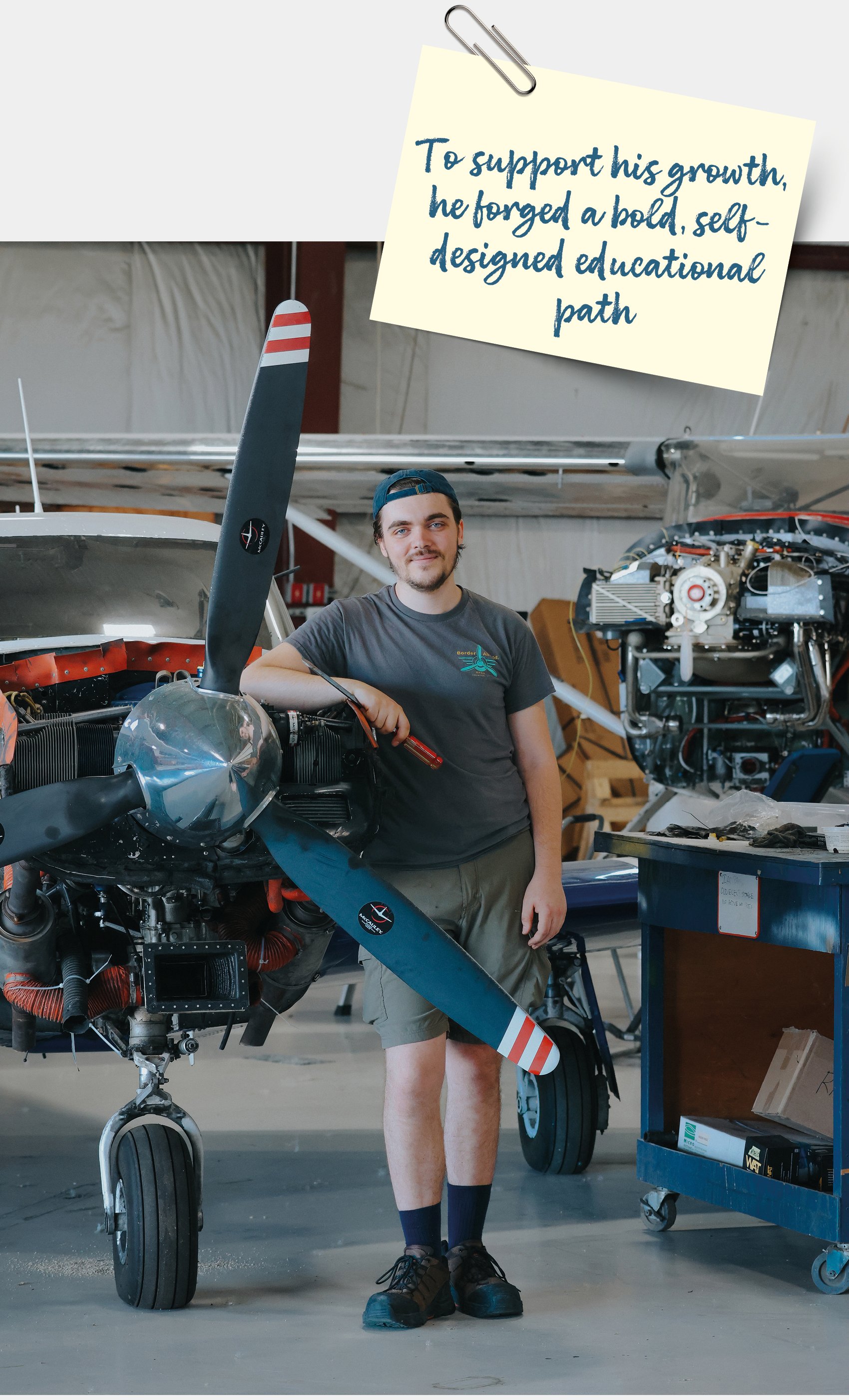
At just 15, Cassidy was told he’d need to repeat two years of high school and attend summer school. Rather than remain in a system that wasn’t supporting his growth, he chose a different path. On his 16th birthday, he earned his GED and set his sights on the skies.
By 2017, Cassidy had enrolled in flight school, and in September 2019, he earned his Private Pilot certificate. That same month, he purchased a small experimental aircraft to build flight hours. But when the pandemic hit in 2020, his plans to advance toward an instrument rating were paused as flight schools shut down.
Instead of waiting, Cassidy doubled down on restoring his airplane. It was during this process that he realized how much he had to learn about aircraft maintenance and how much he wanted to know. That spark led him to the Harbor Freight Fellows Initiative, where he connected with longtime Airframe & Powerplant (A&P) mentor George Coy and aviation educator Beth White.
After initial plans to apprentice with another shop didn’t pan out, Cassidy began his fellowship with George at Franklin County Airport. There, he immersed himself in the restoration of two Cessna 150s, learning not just tools and techniques, but a way of working that deeply aligned with his passion for machines and his love of aviation.
Even after completing the fellowship, Cassidy stayed on as a volunteer to finish the restoration projects. When the Cessnas finally took flight, piloting an aircraft he’d helped bring back to life was nothing short of transformative.
George recognized Cassidy’s drive and skill and introduced him to his son Cliff, who runs the local aircraft maintenance shop and Fixed Base of Operations (FBO), Border Air. Soon after, Cassidy was officially hired on as an apprentice. He invested his scholarship funds in building his personal toolkit and purchasing parts for his experimental aircraft.
Today, Cassidy continues to work in the shop, gaining hours and experience toward his A&P certification. Once earned, it will allow him to sign off on maintenance work, both for himself and others.